5 proven ways to increase benefits take-up among employees

Many employees aren’t aware of or satisfied with workplace benefits their companies offer. By understanding business goals, knowing employee needs, tailoring communications, and engaging in open dialogue, employers can significantly increase benefits take-up and maximize their investment.
“One of the biggest challenges to achieving workplace inclusion is a lack of senior level buy-in.”
Senior level buy-in is critical to workplace inclusion success. Janice Henson, newly appointed Director of Embedding Inclusion at Equal Approach, discusses how to position inclusion as a business imperative and measure its bottom-line impact through innovative tools and strategic client engagement.
Get ready for the ‘Day After Tomorrow’!

Peter Hinssen, Chairman of Nexxworks, argues that organizations must overcome their fear of radical ideas and risk to prepare for future innovation. He advocates balancing 70% focus on today’s business with 10% investment in revolutionary ‘Day After Tomorrow’ thinking. Successful companies will be agile, customer-focused, and willing to experiment.
Promoting a thinking environment creates inclusion

Creating an inclusive work environment requires addressing behaviors like interrupting, mansplaining, and idea-taking that silence women’s voices in meetings. Research shows these exclusionary practices damage problem-solving quality and undermine confidence, making it essential for organizations to foster thinking environments where all colleagues contribute equally.
Even feminists show bias against female leaders

Research reveals that unconscious gender bias affects everyone, including feminists and women themselves. These automatic mental shortcuts cause us to associate certain roles with specific genders—such as assuming doctors are male or nannies are female—even when reality contradicts these stereotypes. Understanding how our brain’s reward system reinforces biased beliefs is key to overcoming these deeply ingrained patterns.
Menopause is not a women’s issue, at work or anywhere else

Menopause transition significantly impacts working women’s economic participation and workplace experiences, according to recent UK government research. The study reviewed over 100 publications to examine how menopause symptoms affect employment and identifies gaps in support for affected workers across different occupations.
How to prevent cheating in online assessment

Online assessment cheating has decreased significantly since the 1990s due to improved test design and verification methods. Modern psychometric tests use randomly-generated questions, adaptive formats, timed constraints, and verification interviews to prevent common cheating tactics like answer sharing, proxy test-taking, and internet disconnection exploits.
Book review: The Future of the Professions by Daniel & Richard Susskind

In this review of “The Future of the Professions,” Kate Wadia examines how the Susskinds argue technology will transform professional work by democratizing knowledge. While the book presents compelling evidence about disruption in law, medicine, and journalism, Wadia finds the theoretical second half unnecessarily complex and academic, giving it 3 out of 5 stars.
Attachment in the workplace: do you understand how it works?

Attachment Theory, developed by psychiatrist John Bowlby, explains how early relationships with primary caregivers shape our ability to form connections, manage stress, and feel secure. Understanding attachment patterns is essential for effective leadership and workplace relationships.
Planning the Project: HR as the Professional PM

HR professionals often lack formal project management training, yet leading HR technology implementations requires adopting a professional project mindset. This article explores essential PM fundamentals, terminology, and practical techniques to help HR leaders navigate system implementations successfully, from business case through delivery.
Where company values fall short, and what to do about it

Most companies fail to update their values to reflect modern work environments, especially for remote employees. To boost engagement and motivation, organizations must honestly evaluate outdated values, practice what they preach, prioritize transparency, and ensure their philosophy reaches all workers regardless of location.
Employee benefits: the impact of salary sacrifice changes on cycle-to-work schemes

Salary sacrifice schemes are being trimmed back, but cycle-to-work programs remain exempt. These schemes allow employees to purchase bikes and equipment at a discount while saving on National Insurance contributions, benefiting workers, employers, and society through improved health and reduced emissions.
The 7 best leaders of the 21st century- and what you can learn from them

Discover seven leadership lessons from influential 21st century leaders including Warren Buffett, Barack Obama, Bill Marriott, Shirin Ebadi, Queen Elizabeth II, Richard Branson, and Sheryl Sandberg. Learn key insights on handling mistakes, compromise, people skills, equality, change, autonomy, and adversity.
Leaders must avoid bad thinking leading to bad leadership
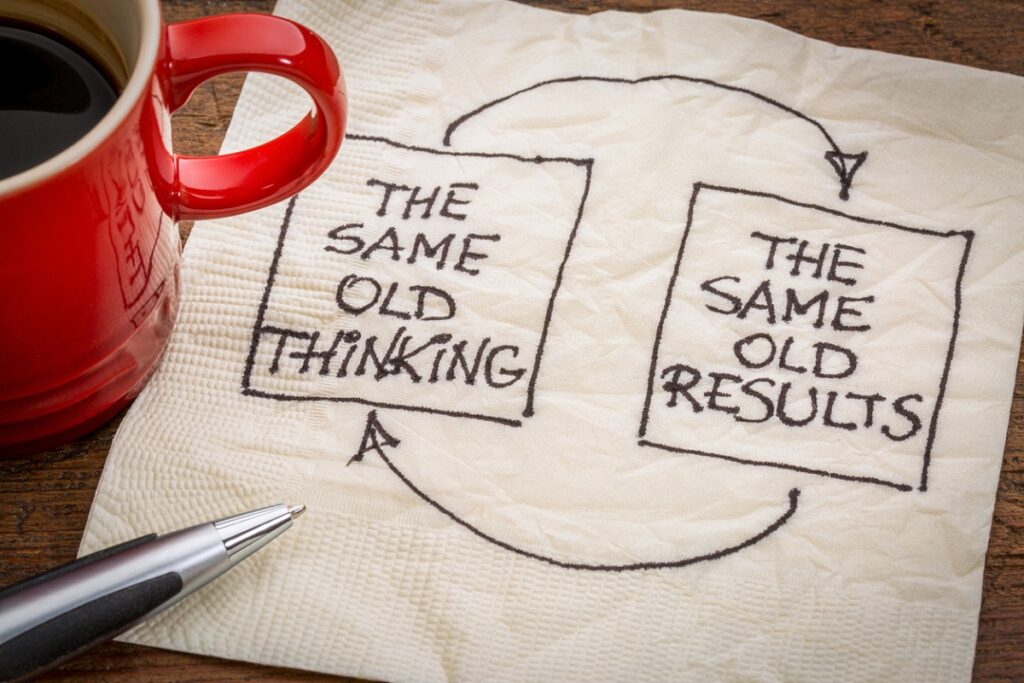
Leaders who rely on narrow perspectives—focusing only on metrics or ignoring human needs—risk catastrophic failures, as seen at Volkswagen and Wells Fargo. Understanding multiple leadership frameworks, including rational, people, political, and symbolic perspectives, is essential to avoid the blind spots that lead to organizational scandals and collapse.
“Organisations focus too much on performance being purely on what is in people’s goals.”

Organizations often overemphasize performance metrics tied to individual goals, overlooking the importance of developing people holistically. Effective leaders should understand how employees want to be led, provide autonomy and timely feedback, and recognize each person’s potential as a developing leader rather than focusing solely on task completion.
How to get on the HR speaking circuit

Build your HR speaking career by establishing expert credentials, crafting compelling speeches that make audiences think, and demonstrating deep knowledge of your subject through workplace success and professional content.
Leaders must stay human in a digitizing world

As automation and AI reshape the workplace, leaders must focus on developing uniquely human qualities like empathy, creativity, and judgment—skills that cannot be coded. Personal flourishing, rooted in positive psychology principles, becomes the foundation for building successful performance cultures where employees bring their best selves to work daily.
How to adopt the mindset of a great leader

Leadership is a learnable skill, not an inborn trait. Through understanding brain plasticity and consciously adopting new behaviors, anyone can develop the mindset of a great leader regardless of their starting point or past experiences.
HR and leadership design for the modern workplace

Modern leadership requires collaborative, adaptive approaches rather than command-and-control management. Organizations must design tailored development programmes that align with their strategic needs, culture, and evolving business challenges to build effective leaders who drive performance and engagement.
Q&A: how are chatbots affecting HR?

Chatbots are transforming HR by enabling employees to access company information through natural conversation. Organizations typically start small—answering questions about benefits or leave—requiring minimal system integration, then expand to tackle challenges like multi-site communication, wellness support, and knowledge centralization.