Achieving the mindshift to tackle failure demand in HR

Failure demand—repeated tasks and error cleanup—clogs HR schedules and stems from rigid, top-down process design that ignores human complexity. Using systems thinking to identify and eliminate failure demand can free teams to focus on strategic, value-driving work that actually improves employee experience.
HR for small business: how to write HR policies for SMEs

Small businesses need fair and transparent HR policies, but don’t write them just for compliance. Before creating policies, audit what’s essential by law, assess relevance to your culture, and consider whether training or better communication might address the underlying issue instead.
Six steps to better learning and development for small businesses

Small business HR professionals can improve learning and development without large budgets by fostering continuous learning through regular one-on-one conversations, encouraging reflection, and leveraging on-the-job and social learning alongside formal training courses.
Employee engagement: why small businesses need to do it too

Small businesses often overlook employee engagement as too time-consuming or costly, but it’s actually essential to business success. True engagement is a social contract where employers share strategic goals and listen to employee concerns—requiring no expensive technology, just genuine communication and transparency.
Workforce analytics: data storytelling and why you should know your audience

Effective workforce analytics storytelling requires understanding your audience and customizing your message accordingly. Rather than explaining complex methodologies for credibility, focus on business impact—the information your audience actually cares about. Different stakeholder groups require different delivery approaches, from visual high-level summaries to detailed statistical insights.
Workforce analytics: demystifying HR analytics – it’s not what you think

HR analytics is about understanding your workforce to improve business performance, not complex statistics or HR functions alone. Also called people or workforce analytics, it uses data-driven insights to drive revenue growth, productivity, and employee engagement—a powerful tool many already use without realizing it.
Workforce analytics: how to be a successful people analytics leader

Successful workforce analytics leaders typically report directly to the CHRO, giving them the organizational positioning and influence needed to drive analytical decision-making across HR and the broader business.
Reimagine business value: the world’s changing expectations of companies

Companies face mounting pressure to address climate change, social inequality, and environmental degradation. As natural and social crises intensify, traditional business strategies focused solely on profit maximization are becoming obsolete. Society now demands corporate accountability on broader issues beyond shareholder returns.
Ten reasons to love doing HR for a small business

Small business HR offers distinct advantages including minimal bureaucracy, direct access to leadership and employees, and the ability to implement changes quickly without layers of approval. You work with real people rather than impersonal metrics and see immediate returns on HR initiatives.
The ethical employee: a look at moral behaviour

Ethical workplace behavior extends beyond job duties—your individual actions, emotions, and character traits ripple through your organization and affect colleagues. By cultivating empathy, honesty, and compassion, employees can take responsibility for their impact while contributing meaningfully to workplace culture.
The ethical employee: what we bring to our business

Ethical employees bring far more to their organizations than basic job performance. Beyond fulfilling contractual duties, workers contribute personal characteristics like empathy, humor, creativity, and individual communication styles that create a dynamic workplace culture and true human capital.
The ethical employee: we have the power

Employees at all levels have the power to influence workplace ethics and organizational culture. Through interconnected relationships in complex adaptive systems, individual actions cascade throughout an organization, making ethical behavior from every person critical to business success and integrity.
Recruitment: how to hire HR professionals and why it’s not as simple as you think

Hiring HR professionals is more complex than it appears due to specialized skill requirements, multiple industry sectors, and the preference for relevant sector experience. Organizations typically prioritize candidates who understand their industry’s specific language and culture, making HR recruitment particularly challenging despite an apparent abundance of candidates.
Avoiding automation culture shock among your employees

Help employees adapt to automation technologies by fostering a company culture that supports adoption and reskilling. HR leaders play a critical role in preventing automation culture shock and building trust between team members and digital workers.
Bridging the gap: how internal communications and HR can work better together

Internal communications and HR teams often work in silos despite shared goals of employee engagement and organizational success. By bridging the gap between these disciplines through better collaboration, organizations can create more cohesive strategies that improve employee experience and drive meaningful engagement across the workplace.
Employee rewards: why bonus culture can be corrosive

Bonus schemes are often used to motivate employees, but research shows they can backfire. When financial rewards are available, employees may exaggerate accomplishments, falsify documents, and manipulate managers to gain bonuses, potentially creating a culture of unhealthy competition and disloyalty rather than genuine productivity.
Man trouble: HR’s role in men’s mental health
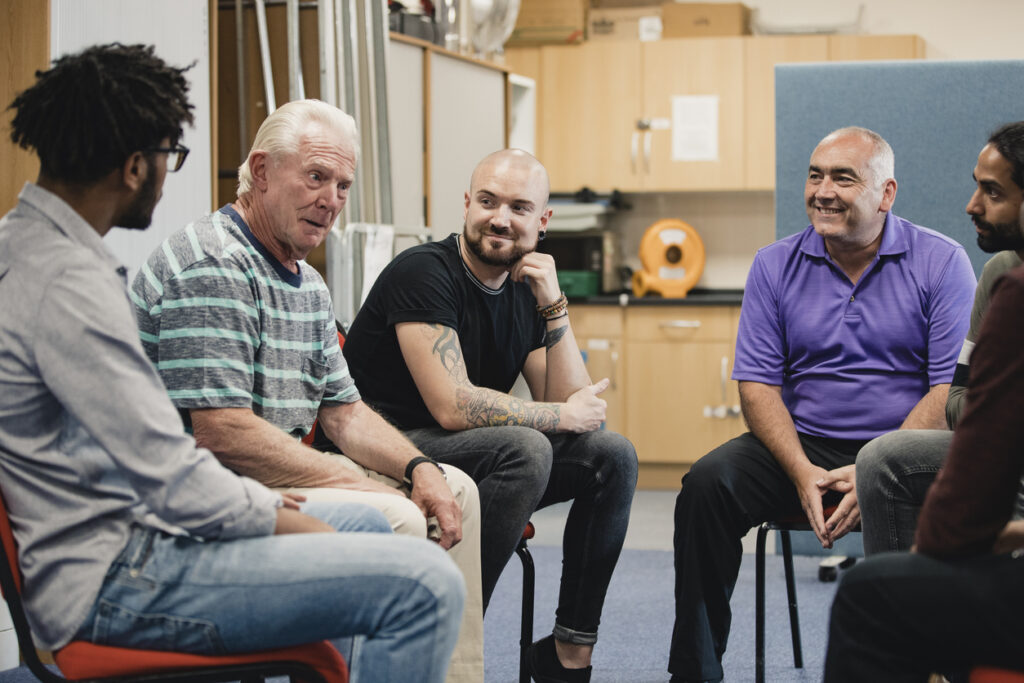
HR professionals have a duty to address men’s mental health in the workplace, where 81.8% of men experience mental ill health compared to 67.8% of women. Six in ten men feel unable to discuss mental health issues with their managers, contributing to broader risks including higher suicide rates and substance dependency among men.
Recruitment: why job brand is now more important than employer brand

Job brand now matters more than employer brand in recruitment, as candidates focus on specific role details like salary and location rather than company reputation. Modern jobseekers apply broadly across industries without researching employer brand, instead deciding suitability based on job page information before applying.
Boring to brilliant: empowering your employees to understand their pension

Most employees don’t understand their pension schemes, with over 50% unfamiliar with the details and only 10% knowing their pot’s value. Clear, engaging communication that demystifies pension jargon can empower employees to take control of retirement planning while boosting engagement and retention.
HR job seeking: how to stand out in a crowded market

Experienced HR professionals can stand out in today’s competitive job market by highlighting specialized skills like TUPE, M&A experience, HRIS systems knowledge, and global expertise. Emphasize achievements and measurable impact rather than job titles, and showcase a blended skill set that demonstrates adaptability across multiple HR functions.