
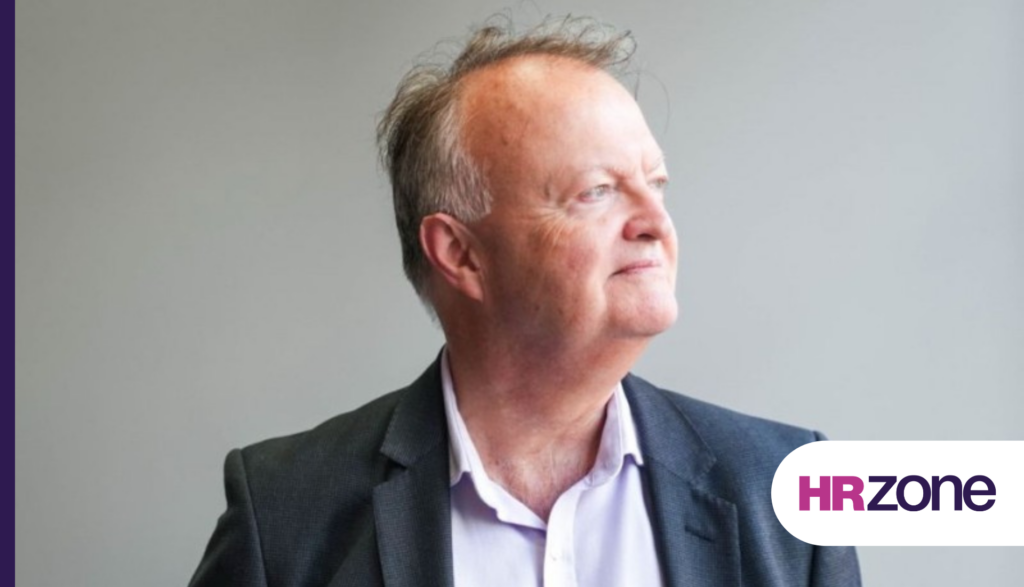
With over 40 years in HR and 22 director roles under his belt, Craig McCoy has seen the profession evolve through countless economic cycles and political shifts. But 2025, he suggests, may have been one of the toughest years yet for HR leaders. Now chairing the HR Connection Group – a national networking organisation serving 6,000 HR professionals across six UK cities – Craig is acutely aware of what’s burdening HR leaders right now.
We spoke to Craig at the start of 2026 to understand how HR leaders are navigating the year ahead, where they’re feeling the pressure, and what strategies might help them navigate through another tough year.
Watch the full interview
More about Craig…
Craig’s HR career spans the tech, media and healthcare sectors, including senior roles at Sky, BT, Dentsu and Bupa. For the past decade, he’s specialised in health and social care, particularly elderly care. He chaired the London HR Connection for 10 years whilst it was part of the CIPD before taking it on independently 18 months ago.
Since then, the group has expanded rapidly, growing from a London-centric community to a national organisation. The expansion reflects both Craig’s commitment to connecting HR leaders and the profession’s growing appetite for peer support during uncertain times.
Key discussion points
Economic pressures are reshaping employment
The past year placed unprecedented financial strain on UK employers. National Living Wage increases, combined with higher National Insurance contributions, created what Craig describes as ‘a big load’ that inhibited business growth and, in some cases, led to closures.
For HR leaders, this translated into difficult conversations about headcount, reduced recruitment budgets and pressure to do more with less.
Yet Craig sees a silver lining: these constraints provide a platform for HR to demonstrate real commercial value by tackling recruitment and retention challenges in meaningful ways.
The Employment Rights Act: The waiting game is over
Very few HR leaders Craig speaks with actually support the Employment Rights Bill, now an Act. Whilst the legislation benefits employees through day-one rights and stronger trade union protections, it reduces employer flexibility and increases costs – precisely what struggling businesses don’t need.
Many organisations remain unprepared. With various provisions in draft form and details still shifting – such as unfair dismissal claims moving from two years to six months – HR teams adopted a ‘wait and see’ approach. But waiting time is running out.
Craig shares some pragmatic advice: even without complete clarity, review your probation policies now. If you employ zero-hours or agency workers, start thinking about the implications of reduced deployment flexibility and increased permanent employment rights. The direction of travel is clear, even if every detail isn’t.
Skills gaps: The £120 billion question
The Learning and Work Institute‘s projection that UK skills shortages will cost £120 billion by 2030 isn’t abstract for the HR leaders Craig connects with – it’s their daily reality.
Immigration policy tightening has exacerbated this, particularly for sectors heavily dependent on immigrant labour. HR directors face genuine headaches filling gaps that were previously filled by international talent.
The solution lies in strategic workforce planning – not just recruitment forecasting. This means understanding which skills your organisation truly needs, mapping where gaps will emerge, and building talent pipelines through apprenticeships, partnerships with educational institutions, and robust learning and development programmes.
AI: from hype to deployment
After a year of AI hyperbole, Craig notes we’re finally seeing genuine implementation rather than just conversation. This shift matters for HR because artificial intelligence creates direct opportunities for the function to lead.
Beyond process automation – important but hardly revolutionary – AI opens doors for HR to demonstrate strategic value in workforce planning, talent analytics, employee experience design and skills development.
For HR leaders feeling stretched, AI offers a chance to reclaim time spent on administrative tasks and redirect it towards higher-value work.
Global uncertainty: Stay alert
Craig highlights that global political and economic scenarios are becoming more immediate and pressing for HR leaders. Potential conflicts, climate change implications, pandemic possibilities, Brexit’s ongoing reverberations – these all carry serious people-related consequences.
HR cannot afford to ignore global developments or assume they’re someone else’s concern. Workforce planning must account for scenarios that might have seemed remote just five years ago.
The pace of change isn’t slowing. Businesses – and HR functions – that fail to stay alert and adaptable are at risk.
Takeaways and actions
- Stay commercial and stay real. Economic pressures demand that HR demonstrates clear business value. Connect every initiative to commercial outcomes and speak the language of the boardroom.
- Prepare for the Employment Rights Act now. Don’t wait for perfect clarity. Review probation policies, assess your use of flexible and zero-hours workers, and prepare for reduced deployment flexibility.
- Make workforce planning genuinely strategic. Map skills gaps, build partnerships with educational institutions, and create internal development pathways. The £120 billion skills shortage won’t solve itself.
- Lead on AI implementation. This is HR’s opportunity to demonstrate strategic leadership. Focus not just on automation but on workforce impact, ethical deployment, and using freed-up capacity for higher-value work.
- Look after yourself and your team. Craig sees significant burnout among HR professionals who excel at caring for everyone except themselves. You cannot pour from an empty cup – prioritise your own wellbeing to sustain your effectiveness.
The clusterbomb of challenges facing HR in 2026 is real. But so are the opportunities to demonstrate leadership, drive genuine value, and shape organisations that can thrive amid uncertainty. Stay alert, stay connected, and remember that you’re not navigating this alone.
Connect with Craig McCoy on LinkedIn and join the HR Connection Group.