

The debate around return-to-office (RTO) mandates and their efficacy shows little sign of abating. As well-known brands continue to tighten their hybrid working policies, any degree of mismanagement, communication issues, or employee pushback makes for headline reading. One recent example (of many) is Paramount spending $185 million on severance packages after 600 employees refused to accept the transition to a strict five-day return to office.
Beyond the public failings of big brands, many organisations are still grappling with their hybrid working arrangements. How do you strike the right balance between the needs of the business and its people? How do you encourage employees back into the office without mandating it? How do you improve the performance of hybrid teams?
To help answer these questions, we spoke to Jane Young, Head of Future of Work at workplace technology company HubStar. With a strong background in innovation and digital transformation, Jane develops strategies and frameworks that help organisations grow high-autonomy leadership, boost team performance, and drive remote-first collaboration.
She has worked with diverse organisations, from tech startups and scaleups to renowned brands like 3M, Hiscox, Barclays, and Anglo American. With experience of creating positive outcomes for hybrid teams, Jane spoke to HRZone about the biggest hurdles organisations face when updating their hybrid working policies, and how to overcome them.
Watch the interview
Key discussion points
With hybrid working policies rarely translating to the reality of how – and where – work gets done, Jane reveals where organisations get it wrong, from poor data and rigidity to measuring presence instead of outcomes.
RTO mandates: Nuance over blanket rules
The RTO mandates that backfire – and make headlines – tend to apply a strict, punitive, one-size-fits-all approach, often causing the most high-performing employees to leave. Evidence suggests that when mandates allow flexible guidelines, exceptions, and team agreements they are far more effective. “Mandates are not some evil thing if they’re done right,” Jane highlighted. “There needs to be a bit of give and not a blanket.”
The policy stack approach
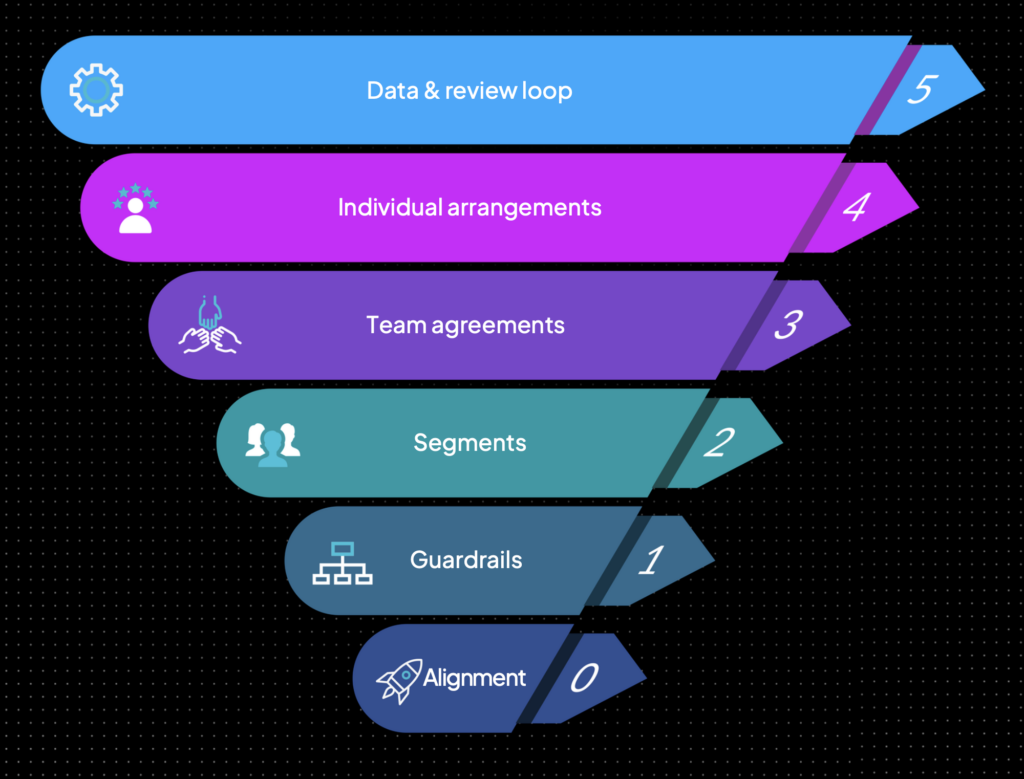
A policy stack approach fares better than a single rigid policy. At the top, you have alignment on the broad policy across key stakeholders such as HR, IT, facilities, and real estate. Below that, you have guardrails, then segments based on factors such as location and job role. Next, you have team-level agreements that managers and employees co-create to outline how they will work together. “This is where the magic happens,” Jane remarked. “Any given team is best placed to know how they should work.” Finally, you have individual agreements, with a stage for data analysis and feedback loops embedded for continuous assessment and refinement.
The data gap problem
Many organisations lack visibility into the gap between their stated hybrid policy and what’s actually happening on the ground. Taking a more data-informed approach isn’t about surveillance, Jane commented: “It’s not about measuring people so that you can bash them with a stick if they’re not doing the right thing.” Better data enables smarter decisions around space planning, utilisation, and fairness. “The data is important in matching the needs of the business and the needs of the people.”
Manager training and permission
Recent research finds one-third of UK managers are secretly negotiating flexible hours with their teams. “Who wouldn’t?”, Jane remarked. If a high-performing team member is coming in fewer days than the employer mandates, it’s easy to see why managers would quietly ignore the rules to retain them. The problem lies in the covert nature of this approach – and the sense of unfairness it can create among employees. Managers need clearer guardrails on what’s acceptable, along with training in hybrid team management and psychological safety to have honest conversations with their teams.
Measuring outcomes, not presence
The real shift organisations need to make is from monitoring time and attendance to tracking meaningful outcomes. When aspiring to make positive change across the organisation, leaders should be mindful that top-down change rarely works. Instead, teams should be allowed to set and track their own goals – aligned to wider organisational objectives. This way, not only do you provide teams with autonomy and clarity – it also becomes, as Jane puts it, “blatantly obvious who’s doing what.”
Key takeaways for HR
- Audit the gap between policy and reality. Before making any changes, gather data on how and where teams are actually working. Look for patterns in attendance, utilisation, and engagement. You cannot close a gap you cannot see.
- Build a policy stack, not a single rule. Align key stakeholders on shared goals first. Then set a broad organisational guideline, apply relevant segmentations by role or location, and empower teams to create their own working agreements within those guardrails.
- Invest in manager capability. Managers need practical guidance on how to lead hybrid teams, including how to facilitate honest team conversations about ways of working, how to handle exceptions fairly, and how to create psychological safety within those discussions.
- Make it safe to be transparent. Managers who are secretly bending the rules are often doing so because the culture does not allow for open negotiation. Create clear channels through which managers can report working arrangements honestly, without fear of repercussion, so decisions can be made on accurate data.
- Shift focus from presence to outcomes. Work with teams to define what good looks like for their role. Encourage teams to set their own goals, track their own progress, and share updates asynchronously. This builds accountability without the need for attendance monitoring.
Useful resources
Hybrid policy vs reality playbook: Most hybrid policies fail because they’re built on the sand of assumptions instead of the bedrock of data. This guide shows you exactly how to fix that.
Hybrid policy canvas: Need to create a hybrid policy but feeling stumped and overwhelmed? This hybrid policy template helps you create policies that stick.
Learn more about HubStar: Keep track of hybrid policy compliance with instant, accurate team-level attendance insights, all in one place.